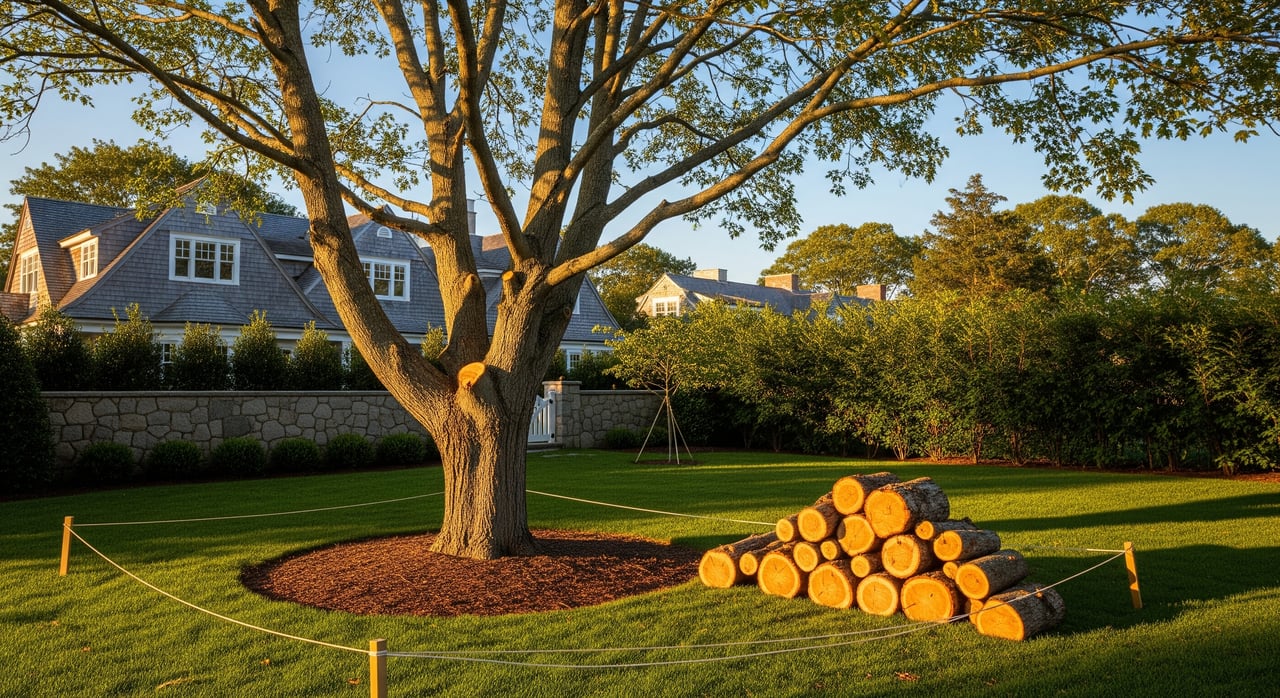
Trees add beauty and value to your Darien home, but they also come with rules and responsibilities. Maybe you are eyeing a leaning oak near the curb or planning a major pruning after a storm. Before you call a contractor, you need to know who owns the tree, what permits apply, and how to keep your property safe in coastal winds.
This guide walks you through when to contact the Town Tree Warden, how to hire qualified arborists, and practical steps to harden your landscape against wind. You will leave with clear checklists and a plan to move forward with confidence. Let’s dive in.
What governs tree work in Darien
Trees in the public right of way or on town property are typically under municipal control in Connecticut. In Darien, that authority is exercised through a Tree Warden. If a tree stands between the curb and your property line, assume it may be a public tree until confirmed.
Connecticut municipalities implement state statutes and local ordinances that guide how public trees are maintained and removed. In some cases, other rules also apply, including wetlands, coastal management, zoning, or historic district protections. If your project touches wetland buffers, coastal floodplains, or designated conservation areas, separate permits may be required.
Utility companies operate vegetation management programs near power lines. Work close to electric lines requires qualified crews and often coordination with the utility. Because several authorities may overlap on a single tree, your safest first step is to check with Darien Town Hall before starting any work.
Street trees and the Town Tree Warden
If a tree sits in the public right of way, you need permission before any pruning, removal, or stump work. The Tree Warden can authorize or deny work and may set conditions to protect public infrastructure. Early contact saves time and prevents costly mistakes.
When to contact the Tree Warden
- Any work on trees in the right of way, parks, or town land
- Hazard concerns for trees that could fall into the road or endanger utilities
- Requests to remove stumps, plant a new street tree, or adjust a sidewalk and tree pit
- Planned work by private contractors that could affect the town strip between curb and property line
How to confirm tree location
- Check the distance from the curb to the trunk and compare with your property survey
- If unsure, call the Tree Warden or Public Works to confirm ownership
- Do not hire a contractor to work in the right of way until you have written authorization
What to expect from the process
- For scheduled pruning or removals, you may need an application, written permission, or a permit before work begins
- The Tree Warden may require oversight to ensure safety standards and protection of public assets
- Some towns require replacement trees after removals, so ask about any replacement expectations
After storms
- Emergency hazards that block the road or threaten public safety should be reported to the town’s emergency or Public Works line, and the Tree Warden
- For nonemergencies, document the condition with photos, notify the Tree Warden, and request guidance
- Use approved contractors for any follow-up work and keep permission in writing
Hiring the right arborist
The right pro protects your trees, your property, and your budget. Focus on credentials, insurance, and a clear scope of work.
Credentials to look for
- ISA Certified Arborist for professional training and continuing education
- TCIA accreditation for company-level safety and quality systems
- Pesticide application license if any insect or disease treatments are planned
- Line clearance qualifications and utility coordination experience for work near power lines
- Experience with coastal trees and salt exposure in shoreline neighborhoods
Insurance and permits
- Request current general liability and workers’ compensation certificates
- Verify coverage for subcontractors, including crane operators when used
- If work touches the town right of way, require proof of Tree Warden permission
- Confirm the contractor will secure any required traffic control or street permits
Scope of work and safety standards
- Get a written estimate that lists each tree and the exact work per tree
- Confirm whether the contractor follows ANSI A300 pruning standards and ANSI Z133 safety standards
- Set a clear timeline, payment schedule, and change order procedure
- Spell out cleanup, debris disposal, and whether wood will be chipped, hauled away, or left on site
- Ask about warranty terms for pruning, stump treatment, or root pruning impacts
Questions to ask contractors
- Are you an ISA Certified Arborist? What is your certification number?
- Can you provide current insurance certificates?
- Do you have experience working in Darien and with the Tree Warden or DPW?
- Who will obtain any municipal or conservation permits?
- How will you protect utilities, structures, and pedestrians? Do you provide traffic control?
- What is your emergency response process after storms?
Costs and bids
Get at least three comparable written bids. Price differences usually reflect tree size, access challenges, risks near structures or lines, disposal methods, and equipment needs such as cranes. The lowest bid is not always the best value if safety and standards are unclear.
Utilities and safety
For trees near power lines, contact the local utility or have your contractor coordinate the work. Utilities like Eversource have legal rights and their own pruning standards. Do not allow anyone to work near energized lines unless they are trained and authorized for line clearance.
Coastal wind hardening for Darien homes
Darien’s shoreline location means frequent wind and salt exposure. A proactive plan helps you reduce damage and preserve curb appeal.
Principles for coastal sites
- Choose wind firm species and avoid tall, shallow rooted trees in exposed locations
- Favor salt tolerant native species or cultivars near the shore
- Protect root health by preventing soil compaction and preserving root volume
- Maintain an aerodynamic canopy through regular, professional pruning and avoid topping
- Diversify species, ages, and sizes to reduce risk from pests and storms
Practical hardening measures
- Schedule periodic pruning to remove hazard limbs, reduce sail area, and correct structural defects
- Remove severely decayed or structurally unsound trees before they fail
- Use layered windbreaks with trees and shrubs placed at proper distances
- Stabilize soils and shorelines with appropriate plantings, and consult Conservation staff if near coastal resources
- Stake newly planted trees with flexible supports only until roots establish
- Place new trees with mature size in mind, and keep safe clearance from structures, driveways, and utilities
Post storm recovery
- Inspect for root lift, trunk cracks, large branch failures, or new lean; call a qualified arborist quickly
- Remove broken limbs with proper cuts to limit decay; follow arborist recommendations for large wounds
- Replant with resilient species and update your property or HOA tree plan to replace losses over time
Quick checklists
Homeowner checklist before any tree work
- Step 1: Confirm the tree’s location, private property or right of way
- Step 2: If in the right of way or unsure, contact the Tree Warden or Public Works
- Step 3: If near wetlands or the coast, check with Conservation or Planning for permits
- Step 4: Get 2 to 3 written bids from certified, insured arborists and verify credentials
- Step 5: Require the contractor to coordinate utilities and obtain any municipal permits
- Step 6: Keep all permits and written authorizations on file
HOA board checklist
- Create a written tree policy with inspection schedules and standards for pruning, removal, and replacement
- Require board approval for any contractor work on common areas and obtain multiple bids
- Request insurance certificates and, when possible, name the HOA as additional insured
- Document Tree Warden approvals and town permits; consult legal counsel for easements and responsibilities
- Budget for proactive removals and new plantings to reduce emergency costs
Final thoughts and next steps
When you know who owns the tree, follow the right permit path, and hire qualified pros, you protect both safety and property value. Darien’s coastal setting rewards regular maintenance and a strategic planting plan. Keep written approvals, work with certified arborists, and coordinate with utilities and town departments early.
If you are planning improvements before a sale, or you just bought a home that needs cleanup and pruning, you do not have to figure it out alone. I can connect you with vetted local arborists and help you understand which updates will best support your long term goals. Schedule a personalized consultation with Linda Dunsmore to talk through your property plan.
FAQs
Who owns the tree between the curb and my yard in Darien?
- In many cases the town owns and maintains street trees in the right of way. Confirm ownership with the Tree Warden before you schedule work.
Do I need permission to prune or remove a street tree in front of my home?
- Yes, work in the public right of way requires approval from the Tree Warden. Get written authorization before hiring a contractor.
What if a tree near the road looks dangerous after a storm?
- Report emergency hazards to the town’s emergency or Public Works line and the Tree Warden. For nonemergencies, document the issue and request guidance.
What credentials should my arborist have in Darien?
- Look for an ISA Certified Arborist, proof of insurance, and experience with municipal processes and coastal conditions. For work near lines, require line clearance qualifications.
Can tree work require wetlands or coastal permits?
- Yes, if the work affects regulated buffers, coastal floodplains, or conservation areas. Check with Darien Conservation or Planning before proceeding.